The whole sacramental map
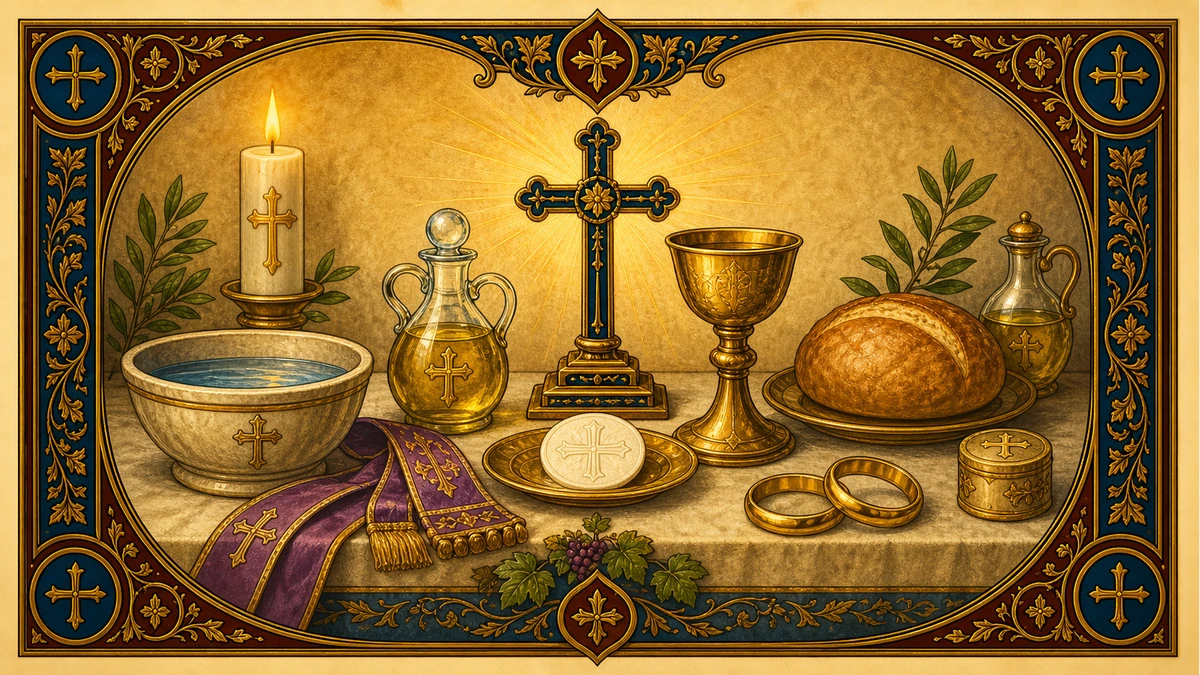
The sacraments are not random Catholic ceremonies. They are visible signs instituted by Christ and entrusted to the Church, through which Christ gives grace. They touch the whole shape of life: birth into Christ, strengthening, food, mercy, sickness, marriage, ordained service, worship, and mission.
How to approach this sacrament
- What is Christ doing here? The seven sacraments touch birth into Christ, healing, forgiveness, nourishment, vocation, service, marriage, sickness, and mission.
- What should I read or pray with? Read John 3:5 slowly, then use CCC 1210-1211 to see what Christ gives through this sacrament, what the visible sign means, and how the grace received should shape daily conversion.
- What concrete step can I take? Write the seven sacraments in three groups: initiation, healing, and service of communion. Ask which one you understand least.
Why the sacraments form a whole life
Catholic life can look like scattered ceremonies until their pattern becomes clear. The sacraments are encounters with Christ’s grace in the Church.
For a newcomer, the sacraments can look like milestones: baptism day, first Communion, wedding, confession, anointing. Catholic faith sees more. The sacraments are encounters with Christ’s saving work here and now. They are personal, but never merely private; they draw a person into the worship, mercy, communion, and mission of the Church.
The three groups
Sacraments of initiation
Sacraments of initiation
Baptism
The first sacrament of initiation: new birth in Christ through water and the Holy Spirit.
- Visible sign
- Water and the words of Baptism in the name of the Father, Son, and Holy Spirit.
- Grace
- Forgiveness of sins, new birth as a child of God, incorporation into Christ and the Church, and the beginning of sacramental life.
Sacraments of initiation
Confirmation
The sacrament that seals and strengthens baptismal grace for witness and mission.
- Visible sign
- Anointing with sacred chrism, laying on of hands, and the Church’s prayer for the gift of the Holy Spirit.
- Grace
- A deeper rooting in divine sonship, a stronger bond with the Church, and strength of the Holy Spirit for witness.
Sacraments of initiation
Eucharist
The source and summit of Catholic life: Christ truly present and given in Holy Communion.
- Visible sign
- Bread and wine consecrated at Mass, becoming the sacramental Body and Blood of Christ.
- Grace
- Union with Christ, growth in charity, forgiveness of venial sins, unity with the Church, and mission.
Sacraments of healing
Sacraments of healing
Reconciliation
The sacrament of mercy where sins are confessed and Christ’s forgiveness is heard.
- Visible sign
- Confession of sins, contrition, absolution by the priest, and penance.
- Grace
- Forgiveness, reconciliation with God and the Church, peace of conscience, spiritual strength, and healing.
Sacraments of healing
Anointing Of The Sick
Christ’s sacramental strength, forgiveness, and comfort for those seriously ill or frail.
- Visible sign
- Priestly prayer and anointing with the Oil of the Sick.
- Grace
- Strength, peace, courage, forgiveness when needed, union with Christ’s Passion, and preparation for healing or final passage.
Sacraments at the service of communion
Sacraments at the service of communion
Marriage
The sacrament of faithful covenant love between baptised spouses.
- Visible sign
- The free consent of the spouses, expressed before the Church.
- Grace
- Help for lifelong fidelity, openness to life, family holiness, mutual service, forgiveness, and mission.
Sacraments at the service of communion
Holy Orders
The sacrament by which bishops, priests, and deacons are ordained for service in the Church.
- Visible sign
- Laying on of hands and the consecratory prayer.
- Grace
- A sacramental mission to teach, sanctify, shepherd, preach, serve, and build up the Church.
What Catholics mean by sacrament
Visible signs
God uses material things because creation is good and the Word became flesh. Water, oil, bread, wine, spoken words, human consent, and laying on of hands are not distractions from spiritual life; they are sacramental signs.
Christ acts
The outward sign, the words of the rite, and the proper minister of the sacrament matter. But Catholics do not believe a sacrament depends on the minister’s personality or holiness. Christ is the one who acts through his Church.
Grace is given
Grace is God’s life and help, not a religious mood. The sacraments give grace according to their purpose and call the recipient to respond in faith.
The Church receives and sends
Sacraments are not isolated spiritual experiences. They form the Church as a people who worship, repent, love, serve, marry, heal, and witness.
Scripture and Catechism
Try this this week
Write the seven sacraments in the three groups above. Circle the one you understand least, then open its guide and read only the “visible sign” and “grace” sections first.
Deeper resources and next steps
- Start with Baptism, Confirmation, and Eucharist to understand initiation.
- Read Reconciliation and Anointing Of The Sick to understand healing.
- Read Marriage and Holy Orders to understand service of communion.
- Connect the sacramental map to The Order Of Mass and What Is Grace?.
For families and conversation
Make a chart with seven columns. For each sacrament, draw one visible sign and write one plain sentence: Jesus gives new life, strengthens, feeds, forgives, heals, blesses married love, or ordains ministers to serve.
#sacraments #grace #church